February 25, 2026
GLP-1 in Dubai: Everything You Need to Know
Curious about GLP-1 treatment in Dubai? Speak with our medical team to explore safe, personalised options based on your health profile.
Considering GLP-1 in Dubai? Start With Expert Guidance
GLP-1 medications have transformed the global conversation about weight management, and Dubai is no exception. From clinic waiting lists to pharmacy shortages to dinner party debates, Ozempic, Mounjaro, and Wegovy have become among the most-discussed prescriptions in the UAE. But between the social media hype, the off-label use, and the very real questions about cost and safety, there's a lot of noise to cut through.
This guide covers what GLP-1 medications are, which are available in Dubai, how to access them legally, what they cost, and what you need to know before starting, based on current clinical evidence and UAE regulatory realities.
What Are GLP-1 Medications?
GLP-1 stands for glucagon-like peptide-1, a hormone naturally produced by your gut in response to food. It plays several important roles: it stimulates insulin release, suppresses glucagon (which would otherwise raise blood sugar), slows gastric emptying, and signals the brain that you're full.
GLP-1 receptor agonists are medications that mimic this hormone, but at concentrations significantly higher than those produced naturally and with a much longer duration of action. The result is a sustained reduction in appetite, slower digestion, better blood sugar regulation, and, for most people, meaningful weight loss.
Originally developed as diabetes treatments, this class of drugs has since been approved for weight management in its own right, and research continues to reveal benefits beyond weight and glucose, including cardiovascular protection, reduced risk of sleep apnea, and implications for liver disease.
There are two primary active ingredients driving the Dubai market:
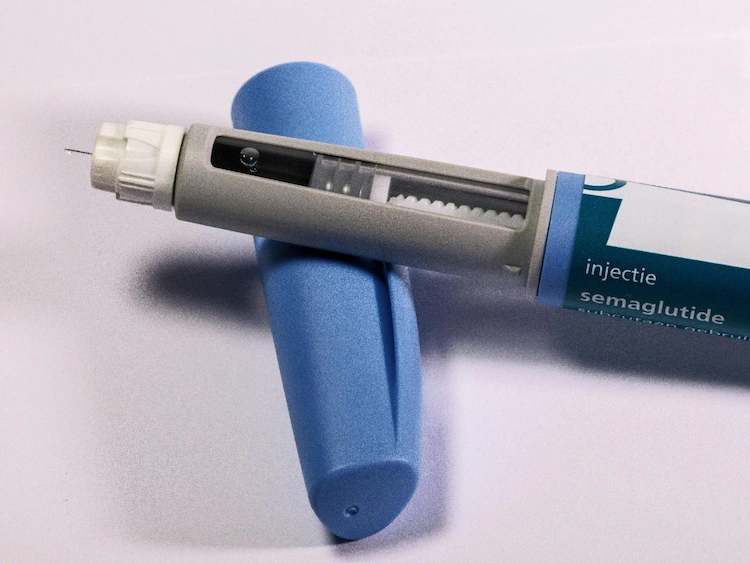
- Semaglutide (the active ingredient in Ozempic and Wegovy) is a GLP-1 receptor agonist administered once weekly by injection. Ozempic is approved for type 2 diabetes; Wegovy is its higher-dose counterpart approved specifically for weight management. Rybelsus is the oral tablet form of semaglutide, approved for the treatment of diabetes.
As of January 2026, the FDA also approved an oral Wegovy pill (semaglutide 25mg daily) for weight management, though UAE regulatory approval follows its own timeline, separate from FDA or EMA decisions, and local availability could still be months away.
- Tirzepatide (the active ingredient in Mounjaro and Zepbound) goes further. It's a dual GIP/GLP-1 receptor agonist that simultaneously activates two appetite-regulating hormone pathways. Clinical trials have shown that it achieves greater average weight loss than semaglutide alone. Mounjaro is approved for type 2 diabetes; Zepbound is its weight-management-approved counterpart.
Understanding how these medications interact with your broader metabolic picture matters before you start. If you're unfamiliar with the underlying drivers of insulin sensitivity, our guide on metabolic health provides useful context on why blood sugar regulation is rarely just about diet.
What's Available in Dubai Right Now?
All four major injectable GLP-1 medications, Ozempic, Wegovy, Mounjaro, and Zepbound, are available in Dubai through licensed clinics and pharmacies. Semaglutide was launched in the UAE in late 2020; tirzepatide followed in mid-2022. Rybelsus (oral semaglutide for diabetes) is also available.
However, availability is not the same as a consistent, reliable supply. The same social media-driven demand surge that created shortages globally hit Dubai hard too. At various points, Mounjaro was completely out of stock at multiple major pharmacies simultaneously, and pharmacists fielded daily calls. Supply has improved since the initial shortage peak, but demand remains high, and stock levels can fluctuate. If you're starting treatment, building a reliable supply relationship with your clinic or pharmacy matters.
A critical point on the legal landscape: unlike some countries where these medications require a formal prescription and strict oversight, Dubai has seen some pharmacies sell GLP-1 drugs over the counter without a doctor's prescription. This has prompted concern from the medical community.
Dr. Ihsan Almarzooqi, co-founder of GluCare diabetes centre in Dubai, has publicly noted the problem of people being prescribed these drugs with "simple weight loss" as the only goal and minimal clinical oversight, meaning their broader metabolic picture, contraindications, and side effect risks go unassessed.
The regulatory reality: GLP-1 medications are prescription drugs in the UAE and should only be obtained through a licensed physician. Over-the-counter availability in some pharmacies reflects enforcement gaps, not sanctioned practice. Getting these medications without medical supervision carries real clinical risk.
How to Get GLP-1 Medications Legally in Dubai
The process for UAE residents is straightforward:
- Consult a licensed physician: An endocrinologist, obesity medicine specialist, or internalist will assess your eligibility based on BMI, metabolic markers, and relevant health history. Contraindications include a personal or family history of thyroid cancer (particularly medullary thyroid carcinoma), pancreatitis, and certain gastrointestinal conditions. The consultation should include baseline labs, fasting glucose, HbA1c, and thyroid function at minimum.
- Get your prescription: Based on the clinical assessment, the physician determines which medication and starting dose is appropriate for you. Dose titration, starting low and increasing gradually, is standard practice to minimise gastrointestinal side effects during adjustment.
- Fill at a licensed pharmacy or purchase through your clinic: Most specialist weight management clinics in Dubai either dispense directly or maintain relationships with specific pharmacies. This matters for supply reliability and for ensuring cold-chain storage has been maintained, as these medications require refrigeration.
For visitors and tourists: GLP-1 medications are not classified as controlled substances in the UAE. They don't appear on the MOHAP controlled drugs list, which means you can bring them into Dubai with a valid prescription and original packaging without needing to apply for a MOHAP import permit (required only for narcotic, psychotropic, or controlled drugs).
Bring your prescription documentation, ensure medication is in original packaging, and carry only the quantity appropriate for your trip. When in doubt, confirm with the UAE embassy or MOHAP ahead of travel.
What Does It Cost?
This is where Dubai reality diverges sharply from what most people expect. Insurance in the UAE does not currently cover GLP-1 medications when prescribed for weight loss; coverage may apply only for type 2 diabetes. For the majority of people using these drugs for weight management, it is entirely out-of-pocket.
Current Dubai pricing per monthly supply:
- Ozempic: approximately AED 1,200 per pen (one pen = approximately four weekly doses)
- Mounjaro: approximately AED 1,800–2,000 per month
- Wegovy and Zepbound: broadly comparable to Mounjaro pricing
Clinic consultation and follow-up fees are typically charged separately, unless you're enrolled in a package program. Some clinics offer monthly management packages that bundle the medication, consultations, and metabolic monitoring into a single fee, which can be worth exploring for cost predictability.
There is some hope on the pricing trajectory. With more competition entering the market and US prices for GLP-1 drugs falling sharply under political and market pressure, UAE pricing is expected to come down, but the timeline is uncertain. For now, expect to budget AED 1,200–2,000 per month purely for the medication, before any clinical oversight costs.
What the Clinical Evidence Actually Shows
The efficacy data for GLP-1 medications is robust by pharmaceutical standards:
Semaglutide (Wegovy 2.4mg): In the STEP trials, participants achieved an average of 14–17% body weight reduction over 68 weeks, compared to approximately 2% with placebo. The recently approved oral Wegovy pill (semaglutide 25mg) showed 16.6% mean weight loss in the OASIS 4 trial, comparable to the injectable form.
Tirzepatide (Mounjaro/Zepbound): The SURMOUNT trials showed average weight loss of 20–22% over 72 weeks, outperforming semaglutide in head-to-head comparisons. One in three participants achieved 25% or greater weight loss.
Beyond weight, semaglutide demonstrated a 20% reduction in major cardiovascular events in the SELECT trial in adults with cardiovascular disease who were overweight or obese, and Zepbound was approved in 2024 for moderate-to-severe obstructive sleep apnea after successful clinical trials.
What the Dubai and Middle East data show: A retrospective analysis from the Dubai Diabetes Center found that the clinical impact on weight loss among UAE and Emirati patients was somewhat lower than that reported in global trials, an important real-world nuance suggesting population-specific response variation.
Separately, given the elevated rates of thyroid disorders and thyroid cancer in the UAE, local endocrinologists have flagged that Emirati patients may face a higher risk of thyroid-related adverse effects, particularly relevant given the existing (though not conclusively established) signal around GLP-1 agonists and medullary thyroid carcinoma risk in rodent studies. Baseline thyroid screening before initiation is especially important in the UAE context.
What You Need to Know Before Starting
The medications work, but not in isolation. Every credible clinician in Dubai echoes the same point: GLP-1 medications are tools, not replacements for dietary change and physical activity. People who have lost 25–30% of body weight in Dubai on these medications consistently describe them as a catalyst for change, not a standalone solution. After stopping, weight returns without sustained lifestyle modification.
Muscle loss is a real concern. Up to 25–40% of the weight loss with GLP-1 medications may come from lean body mass, not fat. A 2024 review in The Lancet Diabetes & Endocrinology described lean mass loss as a universal feature of medically-induced weight loss, not unique to GLP-1s, but significant at the weight loss magnitudes these drugs achieve. Research from the University of Virginia found that GLP-1 drugs improve certain cardiac parameters but showed no clear evidence of cardiorespiratory fitness enhancement, with muscle loss as a likely contributor.
The practical implication: resistance training and adequate protein intake (0.8–1.2g per pound of lean body mass) are not optional extras when on these medications; they're clinically important. Tirzepatide (Mounjaro) appears to produce proportionally less lean mass loss than semaglutide (approximately 25% vs. up to 40% of total weight lost), which is one reason some Dubai physicians prefer it over Ozempic for weight management.
Nutritional deficiencies are underdiagnosed. A 2025 retrospective of 461,382 GLP-1 users found that over 22% developed nutritional deficiencies within one year of starting, with vitamin D deficiency most common. Reduced appetite means reduced food intake, which in turn reduces micronutrient intake, and this compounds over time. Baseline and regular nutritional monitoring is an important part of responsible GLP-1 management that is frequently skipped in Dubai's more commercially-oriented clinic environment.
GLP-1 medications also significantly reduce chronic systemic inflammation, an under-discussed benefit of sustained weight loss. If you want to understand how inflammatory markers like CRP interact with metabolic health, our deep-dive on CRP levels explains why standard reference ranges often miss the most clinically meaningful part of the picture.
Common side effects are gastrointestinal. Nausea, constipation, diarrhoea, and vomiting are the most frequently reported adverse events, particularly during the dose-escalation phase. These typically improve as the body adjusts. Slow titration, starting at the lowest dose and increasing gradually, substantially reduces their severity. Less common but serious potential effects include pancreatitis and bowel obstruction; anyone with a history of pancreatitis should not use these medications.
The stopping problem.
These are not short-course treatments. Clinical evidence shows that the majority of weight loss achieved with GLP-1 medications is lost after discontinuation if lifestyle changes haven't been established. People who have been on GLP-1 medications for 12–24 months and achieved significant weight loss face a genuine clinical question around how and whether to taper and what monitoring is needed. This is another reason why ongoing physician oversight, not a one-time prescription, is the appropriate model.
The Bottom Line for Dubai Residents
GLP-1 medications are clinically meaningful, genuinely available in Dubai, and increasingly accessible; but the ease of access in the UAE market creates its own risks. The same pharmacies selling these drugs over the counter are not tracking your muscle mass, monitoring your thyroid, assessing your nutritional status, or helping you build the metabolic foundation that determines whether your results are sustained.
The gap between getting a prescription and getting good clinical care is significant in Dubai's current GLP-1 environment. The patients achieving durable results and protecting their long-term metabolic health in the process are those being managed comprehensively, with baseline and ongoing biomarker monitoring, regular follow-up, nutritional guidance, and resistance training integrated from the start.
Chairon House offers comprehensive fitness, nutrition and aesthetic protocols designed for people starting or currently on GLP-1 therapy, so your treatment is guided from the beginning.
Frequently Asked Questions
Can I get GLP-1 medications in Dubai without a prescription?
Technically, some pharmacies have sold these medications without requiring a prescription, but this reflects an enforcement gap, not a legal or safe practice. GLP-1 medications are prescription drugs in the UAE and should be obtained through a licensed physician who has assessed your full health picture.
Is Mounjaro or Ozempic better for weight loss in Dubai?
Tirzepatide (Mounjaro) generally produces greater average weight loss than semaglutide (Ozempic/Wegovy) in clinical trials and appears to result in proportionally less muscle mass loss. However, individual response varies, and the right choice depends on your metabolic profile, health history, and contraindications.
Will my insurance cover GLP-1 medications in Dubai?
Currently, UAE insurance does not cover GLP-1 medications when prescribed for weight loss. Coverage may apply when prescribed for type 2 diabetes. This is an evolving area; as global insurance coverage expands and competition reduces drug costs, UAE policies may shift.
How long will I need to stay on GLP-1 medication?
Clinical evidence suggests that most weight loss on GLP-1 medications is regained after stopping if substantial lifestyle changes haven't been maintained. Duration of treatment is therefore an individual clinical decision.
Take the Next Step Toward Smarter Weight Management
GLP-1 medications can be transformative when used responsibly and under medical supervision. If you are exploring options in Dubai, Chairon House provides evidence-based guidance, discreet consultations, and structured follow-up to support long-term metabolic health.
Get a Personalised Metabolic Health Plan
Medication is only one part of the picture. Sustainable results come from combining clinical oversight, nutrition strategy, lifestyle optimisation, and ongoing monitoring. Speak to our in-house experts to design a plan tailored specifically to your goals.