March 4, 2026
7 Things to Know Before Trying Retatrutide for Weight Loss
Retatrutide weight loss at Chairon House combines medical oversight, strength training, and habit coaching to help you lose fat without sacrificing muscle or your long‑term health
Find Out If Retatrutide Is Right for You
Injectable weight-loss medications have come a long way in a short time. First semaglutide, then tirzepatide, and now retatrutide are being talked about as the next step forward. If you have been following the space, you have probably seen some pretty dramatic headlines about it.
But before you get too deep into the hype, it helps to understand what retatrutide actually is, what the current evidence looks like, and whether it makes sense for your situation. This guide covers the key things worth knowing before you consider it as an option.
What Is Retatrutide for Weight Loss?
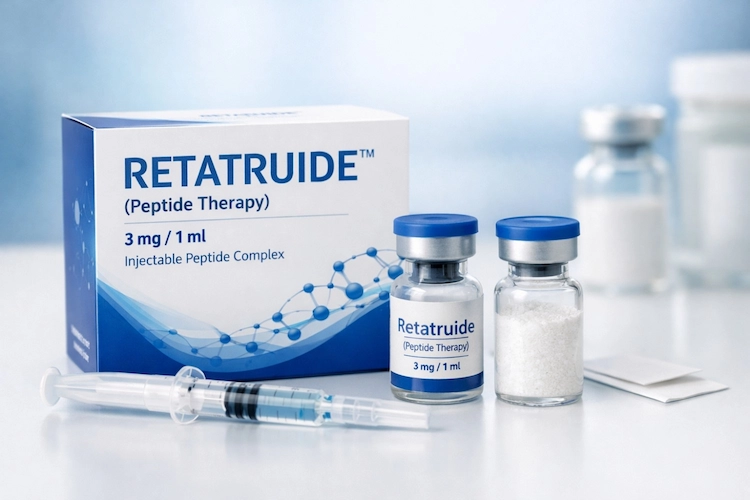
Retatrutide is an injectable medication being studied as a treatment for obesity. It belongs to a newer class of drugs that work by targeting multiple hormone receptors in the body, which makes it more potent than earlier weight-loss medications.
Most people are familiar with semaglutide (sold as Ozempic and Wegovy) and tirzepatide (Mounjaro). Retatrutide takes things a step further. While semaglutide targets one receptor and tirzepatide targets two, retatrutide targets three: GLP-1, GIP, and glucagon. That triple-agonist approach is a big part of why it is generating so much attention.
As of now, retatrutide is still in clinical trials and has not received regulatory approval for weight loss. It is not yet widely available as a prescribed treatment, though results from Phase 2 trials have been significant enough to push it into Phase 3 research.
If you are curious about how this fits into the broader world of peptide-based therapies, it is worth understanding what peptide therapy is and how these compounds work.
Does Retatrutide Work for Weight Loss?
Based on the clinical data available so far, yes, it does appear to work, and the numbers are hard to ignore.
In Phase 2 trials, participants taking the highest dose of retatrutide lost around 24% of their body weight over 48 weeks. To put that in context, semaglutide trials showed roughly a 15% reduction in body weight, and tirzepatide came in at around 20-22%. Retatrutide appears to be outperforming both.
But those headline numbers come with important context. Trial participants followed controlled protocols that included diet and exercise guidance alongside the medication. Real-world results often look different.
How well retatrutide works for any individual depends on the dose, how consistently it is used, how long treatment continues, and what lifestyle changes are happening alongside it. The medication creates the conditions for significant weight loss. What you do with that window matters too.
How Does Retatrutide Work for Weight Loss?
Retatrutide works by activating three hormone receptors: GLP-1, GIP, and glucagon. Each of these plays a different role in how your body manages appetite, blood sugar, and metabolism.
GLP-1 is probably the most familiar one. It signals fullness, slows down how quickly food leaves your stomach, and helps regulate blood sugar after meals. GIP works alongside GLP-1 to improve insulin response and may also support fat metabolism. Glucagon is where retatrutide gets interesting: by activating glucagon receptors, it can increase energy expenditure, meaning your body burns more calories even at rest.
The combined effect is that you feel less hungry, eat less, and your body is simultaneously more efficient at burning through stored fat. That is why the triple-agonist approach produces stronger results than targeting just one or two of these pathways.
It also has a meaningful impact on metabolic health markers beyond the scale, including improvements in blood sugar regulation, insulin sensitivity, and cholesterol levels.
Retatrutide Dosing for Weight Loss: What Patients Should Know
One thing that is consistent across all medications in this class is that dosing starts low and increases gradually. Retatrutide is no different.
In clinical trials, participants typically started on a low dose and moved up through a structured escalation schedule over several months. The purpose of that gradual increase is to give your body time to adjust, which significantly reduces the severity of side effects.
Medical supervision during dose adjustments is not optional, it is important. How your body responds to each dose level will inform whether it is safe to move up, stay at the current dose, or make adjustments. That kind of real-time feedback loop is only possible with clinical oversight.
In the first few weeks of treatment, most people notice changes in appetite fairly quickly. Some experience nausea or digestive discomfort during the early phase.
These usually ease as your body adjusts, but it's worth knowing about them before you start.
Retatrutide Dosage Charts vs Real-Life Prescribing
If you have been searching for retatrutide information online, you have probably come across dosage charts or calculators claiming to tell you exactly what dose you should be on. Treat those with caution.
Standardized dosage charts are based on trial protocols designed to be consistent across a large population of participants. Real-life prescribing does not work that way. A good clinician adjusts your dose based on how you are actually responding: your side-effect profile, your rate of weight loss, your baseline health markers, and how well you tolerate each escalation step.
Self-dosing based on an online chart skips all of that. Beyond getting the numbers wrong, it removes the safety net of having someone monitor your response and catch any early warning signs. For a medication this potent, that matters.
Retatrutide Side Effects and Safety
The most commonly reported side effects in retatrutide trials are nausea, vomiting, reduced appetite, and other GI-related symptoms. These tend to be most noticeable during the early weeks of treatment and during dose increases, then settle down for most people as their body adjusts.
The reason these symptoms happen is fairly straightforward: slowing down gastric emptying, which is part of how the medication works, can cause digestive discomfort, especially in the beginning. Most clinics manage this by being conservative with the dose escalation schedule and advising on things like meal timing and food choices.
As for longer-term safety, retatrutide is still working through the clinical trial process, so the full picture is not complete yet. Phase 2 data have not flagged major safety concerns, but Phase 3 will provide a much more comprehensive view before any regulatory decision is made.
If you ever experience severe abdominal pain, persistent vomiting, signs of an allergic reaction, or anything that feels unusual, that is a reason to contact your healthcare provider promptly rather than waiting to see if it passes.
Is Retatrutide for Weight Loss Right for You?
Retatrutide tends to be most relevant for people with a BMI in the obesity range, or those who are overweight with related health conditions like type 2 diabetes or metabolic syndrome. For people who have not seen sufficient results from lifestyle changes alone or from earlier medications, the stronger mechanism of action may offer more meaningful progress.
That said, it is not the right fit for everyone. People with certain thyroid conditions, a history of pancreatitis, or specific other medical histories would need to approach it carefully or look at other options. It is also still in trials, so access and availability are limited.
Before starting, it is worth asking your provider a few direct questions:
- Am I a good candidate based on my health history?
- What does the dose escalation schedule look like?
- What should I watch for in terms of side effects?
- And what is the plan for maintaining results long term?
If retatrutide is not the right fit, there are other medically guided weight-loss approaches worth exploring, and a good clinician will help you figure out which direction makes the most sense for you.
Is Medication Alone Enough for Sustainable Weight Loss?
Here is something the headlines do not always include: medication alone is rarely enough to keep weight off long term.
The clinical trial results for retatrutide are impressive, but those results were achieved in participants who were also following structured nutrition and activity guidelines. More importantly, what happens when someone stops taking the medication? Studies on similar drugs have consistently shown that a significant portion of weight lost tends to return when treatment ends and lifestyle habits have not changed.
What this means practically is that medication can be an extremely powerful tool for creating a window of change. But it works best when used alongside real shifts in nutrition, sleep, stress management, and movement. Strength training, in particular, plays an important role in preserving muscle mass during weight loss, which is crucial for metabolic health and for keeping weight off over time.
The programs that produce the most durable results are those that treat medication as one component of a broader, integrated approach rather than as the whole strategy.
How Can Chairon House Support Your Weight Loss Journey?
At Chairon House, weight loss support is not built around a single tool. It is designed as a medically guided, integrated protocol that looks at the full picture.
That starts with a comprehensive metabolic assessment. Before any protocol is designed, the team looks at where you are: your metabolic health markers, body composition, hormonal profile, and what is actually driving weight gain or making it hard to lose. That context shapes everything that follows.
From there, your protocol might combine peptide therapy to support appetite regulation and fat metabolism, structured strength and conditioning programming to preserve muscle and drive long-term metabolic health, recovery sessions to manage stress hormones and support sleep quality, and expert coaching to help you build habits that outlast the medication phase.
Nothing at Chairon House is prescribed in isolation. The goal is to make sure that when you lose weight, you are actually healthier at the other end of the process, and that you have the tools and structure to maintain it.
If you are thinking about retatrutide or any other medically guided weight-loss approach, the best starting point is a proper assessment. Book a consultation at Chairon House to get your metabolic health evaluated, understand your options, and build a plan designed specifically for you, not a generic protocol.
Retatrutide Works Best with the Right Plan Around It
Retatrutide can create a powerful window for change—but what you build inside that window is what really lasts. At Chairon House, we use medications, training, recovery, and coaching as a single, integrated protocol so you are not just lighter on the scale, but stronger, healthier, and more confident in how you maintain your results long term.
Start Your Chairon House Weight Loss Assessment
Ready to move beyond generic weight-loss advice? Our team will review your history, labs, and body composition, then walk you through whether retatrutide or another protocol makes the most sense—and what your first 12 weeks could look like